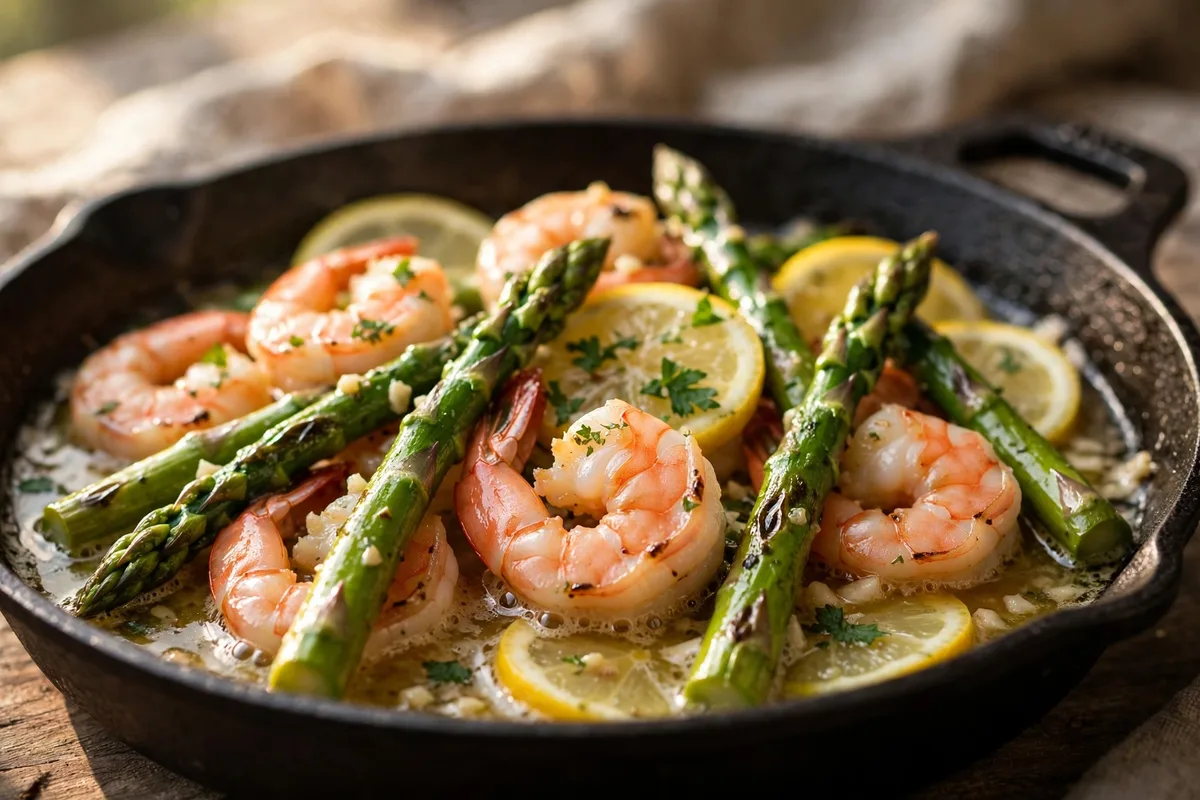
Shrimp and asparagus are two of the fastest-cooking ingredients in any kitchen, and that is exactly why so many versions of this dinner go wrong. The usual method piles raw shrimp and raw asparagus into one pan at the same time, the pan drops in temperature, and everything steams together in its own liquid. The shrimp turn rubbery, the asparagus goes limp and grey-green, and the "lemon garlic butter sauce" is mostly pan water. This one-pan lemon garlic shrimp and asparagus takes a different route: the shrimp sear first, on their own, in a hot pan, and come out while the asparagus blisters in the same skillet. The lemon-garlic butter sauce is built last, from the browned bits the shrimp left behind, and everything comes together for a final minute. The whole dinner takes about 20 minutes — comfortably inside the 30-minute window — and cleanup is a single pan.
It is a straightforward weeknight dinner: lean protein, a full pound of green vegetables, and a sauce that tastes like far more effort than it took. Serve it over rice or pasta, with crusty bread, or on its own for a lighter plate. All times below are estimates, since cooking speed varies with your stove and pan.
Prep time: 10 minutes (estimate)
Cook time: 10 minutes (estimate)
Total time: 20 minutes (estimate)
Servings: 4
Difficulty: Easy
Why this lemon garlic shrimp and asparagus works
The order of operations is the whole recipe. Shrimp cook in about 3 to 4 minutes total, and asparagus needs about the same — but they need different things from the pan. Shrimp need fierce, direct heat and space so they sear and develop golden edges. Asparagus needs a hot pan and a little time to blister and turn bright green while staying crisp. Cook them together and neither gets what it needs; cook them in sequence and both do.
Removing the shrimp before the asparagus goes in also solves the most common shrimp problem: overcooking. Shrimp go from perfectly done to tough in about 60 seconds, and they keep cooking from residual heat even after they leave the pan. By searing them first and setting them aside, you control their doneness precisely, then return them only for the final minute, just long enough to warm through in the sauce.
The sauce follows a simple template that works because each ingredient has a job. Garlic goes in after the asparagus, not before, because garlic burns fast in a hot pan and bitter garlic ruins a butter sauce. A splash of white wine or chicken broth lifts the browned bits — the fond — off the pan, and that fond is where the deep savory flavor lives. Butter goes in off the fiercest heat so it emulsifies into a glossy sauce instead of separating. Lemon zest goes in with the butter for fragrance; lemon juice goes in at the very end so its brightness stays sharp.
Frozen shrimp work well here, which matters on a weeknight. Shrimp freeze and thaw better than almost any other protein, and the large 16–20 count size specified below sears properly instead of shrinking into tight curls. The one non-negotiable step is drying the shrimp thoroughly before they hit the pan: wet shrimp steam, dry shrimp sear.
Ingredients
- 1 lb large shrimp (16–20 count), peeled and deveined, tails on or off
- 1 lb asparagus, woody ends trimmed, cut into 2-inch pieces
- 1 teaspoon kosher salt, divided
- ½ teaspoon freshly ground black pepper
- ¼ teaspoon red pepper flakes (optional, for gentle heat)
- 2 tablespoons olive oil, divided
- 4 cloves garlic, thinly sliced
- ¼ cup dry white wine or low-sodium chicken broth
- 2 tablespoons unsalted butter
- 1 lemon, zested and juiced (about 2 tablespoons juice)
- ½ lemon, thinly sliced, for garnish (optional)
- 2 tablespoons chopped fresh parsley
- ¼ cup grated Parmesan cheese, for serving (optional)
A note on a few of these: buy large shrimp, 16–20 per pound, whether fresh or frozen — smaller shrimp overcook before they can brown, and they shrink into tight, tough curls. If using frozen shrimp, thaw them first: overnight in the refrigerator, or in a colander under cold running water for about 10 minutes, then pat very dry. Choose asparagus spears that are about pencil-thick; very thin spears cook in half the time, while very thick spears need an extra minute. Use a real lemon, not bottled juice — the zest is half the flavor here, and bottled juice cannot provide it.
Instructions
- Prepare everything before the pan gets hot — shrimp cook too fast to prep as you go. If using frozen shrimp, thaw and pat them very dry with paper towels, then season with ½ teaspoon of the kosher salt, the black pepper, and the red pepper flakes (if using). Trim the woody ends from the asparagus and cut the spears into 2-inch pieces. Zest the lemon, juice it, and slice the garlic thinly.
- Heat 1 tablespoon of the olive oil in a large 12-inch skillet over medium-high heat until it shimmers, about 2 minutes.
- Add the shrimp in a single layer with space between them. Sear undisturbed for 1½ to 2 minutes until the undersides are pink with golden edges, then flip and sear 1 to 1½ minutes more. The shrimp are done when they are pink and opaque all the way through and have curled into a loose C shape. Transfer immediately to a plate. If they do not fit in one layer, sear in two batches — crowded shrimp steam instead of searing.
- Reduce the heat to medium and add the remaining tablespoon of olive oil to the same skillet. Add the asparagus in a single layer and cook for 3 to 4 minutes, turning once, until bright green with blistered, lightly charred edges and tender-crisp when pierced with a fork.
- Add the sliced garlic and cook for 30 seconds, stirring constantly, just until fragrant. Do not let it brown — browned garlic turns bitter and will flavor the whole sauce.
- Pour in the white wine or chicken broth and scrape up the browned bits stuck to the bottom of the pan with a wooden spoon. Let it bubble for about 1 minute until reduced by about half.
- Return the shrimp to the skillet along with any juices that collected on the plate. Add the butter, lemon zest, and lemon juice, and toss everything together for about 1 minute until the butter has melted into a glossy sauce that coats the shrimp and asparagus and the shrimp are warmed through. Do not cook longer — the shrimp are already done.
- Remove from the heat. Taste and adjust with the remaining ½ teaspoon of salt if needed. Scatter over the chopped parsley and the lemon slices, and shower with Parmesan if using. Serve immediately, while the sauce is glossy and the asparagus is still bright green.
Tips for the best lemon garlic shrimp and asparagus
Dry shrimp sear; wet shrimp steam. This is the single most important detail in the recipe. Pat the shrimp dry with paper towels, twice if needed, before seasoning. Any surface moisture has to boil off before browning can start, and by the time it does, the shrimp are already overcooked.
Learn the C-shape test. A perfectly cooked shrimp curls into a loose C. A shrimp curled into a tight O is overcooked, and one that is still mostly straight is undercooked. Watch the shape as well as the color: pink and opaque, loose C, out of the pan immediately.
Keep the garlic late and brief. Garlic goes from fragrant to burnt in under a minute in a hot skillet, and burnt garlic is bitter enough to spoil the sauce. Thirty seconds, stirring constantly, is enough. If your pan runs very hot, drop the heat to medium-low for the garlic step.
Substitutions and variations
Green beans instead of asparagus: the closest swap. Trimmed green beans need about the same time — 3 to 4 minutes in the pan — and blister the same way. Broccoli florets work too, cut small, but give them an extra minute. Our one-pan honey garlic chicken and green beans uses the same sear-first build with green beans if you want a chicken version of this format.
No white wine: low-sodium chicken broth is the direct substitute and is listed in the recipe. A tablespoon of extra lemon juice plus a tablespoon of water also works, though the sauce will be a little sharper — hold back a squeeze of lemon at the end if you go this route.
Spicier: double the red pepper flakes, or add a pinch of cayenne with the shrimp seasoning.
What to serve with lemon garlic shrimp and asparagus
Plain steamed rice is the first pairing we recommend: the lemon-garlic butter sauce pools at the bottom of the pan and begs for something to soak it up, and jasmine rice catches every drop. Angel hair pasta is the other natural match — toss the finished skillet directly with the drained pasta and an extra squeeze of lemon. Crusty bread does the same job with less effort.
For a lighter plate, serve the skillet on its own with a simple green salad and a wedge of lemon, or over cauliflower rice. If you like the one-pan format, the one-pan garlic butter steak bites and potatoes is the richer, meat-and-potatoes sibling for heartier nights, and the one-pan balsamic chicken and Brussels sprouts skillet builds its sauce from the pan fond the same way, with a sweet-tart flavor instead of bright lemon.
Storage and reheating
Refrigerator: cool to room temperature (no more than 2 hours on the counter), then store in an airtight container for up to 2 days. Shrimp and asparagus both lose texture faster than chicken or beef dishes, so this one is best eaten the same day.
Freezer: not recommended. Cooked shrimp turn rubbery when frozen and reheated, and asparagus goes soft. This is a 20-minute dinner — it is faster to cook fresh than to thaw and reheat.
Reheating: warm gently in a skillet over medium-low heat with a splash of water or broth, tossing, for 2 to 3 minutes until just warmed through. The microwave overcooks shrimp in seconds, so if you must use one, heat in 30-second bursts at 50% power.
Make-ahead: peel and devein the shrimp, trim and cut the asparagus, slice the garlic, and zest and juice the lemon up to a day ahead, storing each separately in the refrigerator. Cook just before serving.
Lemon garlic shrimp and asparagus FAQ
Can I use frozen shrimp? Yes — frozen shrimp work very well here, and large 16–20 count frozen shrimp are often fresher-tasting than the "fresh" shrimp at a supermarket counter, which is usually previously frozen anyway. Thaw them first, either overnight in the refrigerator or under cold running water for about 10 minutes, then pat them very dry. Never cook shrimp from frozen in this recipe: they release too much water and will steam instead of sear.
Why are my shrimp rubbery? Almost always overcooking. Shrimp need only 1½ to 2 minutes per side in a hot pan, and they keep cooking from residual heat after they leave it. Pull them the moment they turn pink and opaque and curl into a loose C, and return them to the pan only for the final minute of sauce.
Why did my asparagus go limp and grey? Two likely causes: it was crowded in the pan with the shrimp and steamed instead of blistering, or it cooked too long. Asparagus should stay bright green and tender-crisp. Cook it on its own in a single layer, 3 to 4 minutes, and pull it while it still has bite.
Can I make this without white wine? Yes. Low-sodium chicken broth is the substitute listed in the recipe — it still deglazes the pan and lifts the browned bits into the sauce. The sauce will be a little less complex; a squeeze of extra lemon at the end brings back some of the brightness the wine would have added.
What size shrimp should I buy? Large, 16–20 count per pound. Smaller shrimp cook through before they can develop any browning, and they shrink into tight curls. Larger shrimp (U-12 or jumbo) also work — just add about 30 seconds per side.
How do I know the shrimp are done? Look for three things together: pink color all the way through, opaque flesh with no grey translucency left, and a loose C curl. There is no single internal temperature number used for shrimp the way there is for poultry — the visual cues are the standard.
Nutrition (estimated, per serving, serves 4): about 280 calories, 17g fat, 6g carbohydrates, 24g protein. Calculated from ingredient label values; actual numbers vary with the exact shrimp size, oil absorbed, and optional Parmesan.Recipe card
One-Pan Lemon Garlic Shrimp and Asparagus (30 Minutes)
Prep time: 10 minutes (estimate)
Cook time: 10 minutes (estimate)
Total time: 20 minutes (estimate)
Servings: 4
- 1 lb large shrimp (16–20 count), peeled and deveined, tails on or off
- 1 lb asparagus, woody ends trimmed, cut into 2-inch pieces
- 1 tsp kosher salt, divided; ½ tsp black pepper; ¼ tsp red pepper flakes (optional)
- 2 tbsp olive oil, divided
- 4 cloves garlic, thinly sliced
- ¼ cup dry white wine or low-sodium chicken broth
- 2 tbsp unsalted butter
- 1 lemon, zested and juiced (about 2 tbsp juice); ½ lemon, thinly sliced, for garnish (optional)
- 2 tbsp chopped fresh parsley; ¼ cup grated Parmesan (optional)
- Pat shrimp very dry; season with ½ tsp salt, pepper, and red pepper flakes. Trim asparagus and cut into 2-inch pieces. Zest and juice the lemon; slice the garlic.
- Heat 1 tbsp olive oil in a 12-inch skillet over medium-high heat until shimmering, about 2 minutes.
- Sear shrimp in a single layer 1½–2 minutes per side until pink, opaque, and curled into a loose C. Transfer to a plate.
- Reduce heat to medium; add remaining 1 tbsp oil and the asparagus in a single layer. Cook 3–4 minutes, turning once, until bright green and blistered at the edges, tender-crisp.
- Add garlic; cook 30 seconds, stirring, until fragrant. Do not brown.
- Pour in wine or broth; scrape up the browned bits. Simmer about 1 minute until reduced by half.
- Return shrimp with any plate juices; add butter, lemon zest, and lemon juice. Toss about 1 minute until the butter melts into a glossy sauce and the shrimp are warmed through.
- Remove from heat; season with remaining ½ tsp salt if needed. Top with parsley, lemon slices, and Parmesan if using. Serve immediately.
Related recipes
If you liked this one-pan dinner, try the one-pan honey garlic chicken and green beans, which uses the same sear-first method with a sweet-savory glaze; the one-pan garlic butter steak bites and potatoes for a heartier night; or the one-pan balsamic chicken and Brussels sprouts skillet, another stovetop skillet that builds its sauce from the pan fond.