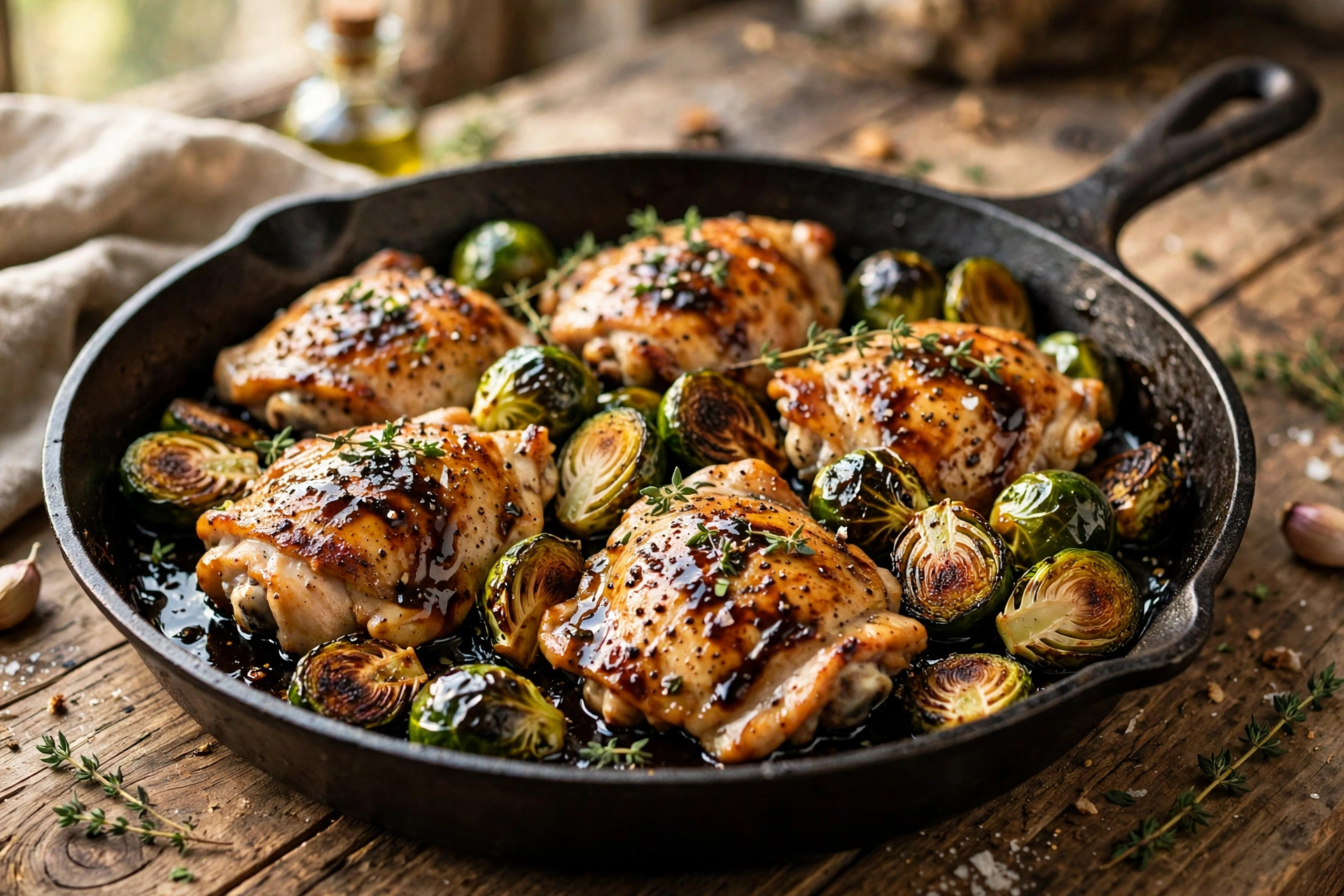
If you want balsamic chicken and Brussels sprouts but you do not want to wait for an oven to preheat, this skillet is the answer. A true stovetop one-pan balsamic chicken and Brussels sprouts skillet: boneless, skinless chicken thighs seared until deeply golden, Brussels sprouts halved and charred cut-side down in the same pan, and a balsamic glaze finished right there in the skillet — sweet, tangy, and clinging to everything. No sheet pan, no oven, no second dish. Dinner is on the table in about 30 minutes, and cleanup is one pan.
Most versions of this dish online are sheet-pan recipes. A skillet does two things better: a hard, fast sear on the chicken, and a glaze built from the browned bits left in the pan. Here the chicken sears first, the sprouts char in the chicken drippings, and the balsamic sauce deglazes the pan. The sprouts get a two-stage treatment — a hot char, then a brief covered steam — so they finish tender inside with crisp, caramelized edges instead of going soft or bitter.
Prep time: 10 minutes (estimate)
Cook time: 20 minutes (estimate)
Total time: 30 minutes (estimate)
Servings: 4
Why this balsamic chicken and Brussels sprouts skillet works
Every step of this recipe has a job, and the one-pan sequence is designed so each step does its job in order. The chicken sears first, undisturbed, so it picks up real browning — and browning is flavor. Boneless, skinless thighs are the right cut here: they are juicier and more forgiving than breasts, they brown faster thanks to their higher fat content, and they stay tender through the glaze-reduction step, when leaner meat would start drying out.
The Brussels sprouts are the second act, not an afterthought. Halved and placed cut-side down in the hot pan, they develop the dark, caramelized edges that make sprouts taste sweet and nutty rather than bitter. A short covered steam with a splash of broth then finishes the centers so they turn tender without going mushy. Because the sprouts cook in the same pan as the chicken, they pick up the savory drippings, and the broth lifts the browned bits — the fond — off the pan so it melts into the glaze later.
The glaze follows a balanced template: balsamic vinegar for tang and depth, a little honey so the vinegar does not sit sharp, Dijon mustard to help it emulsify and cling, garlic for aromatics, and a knob of butter swirled in at the end for body and shine. Balsamic reduces quickly and can go from glossy to burnt-tasting in a minute at a hard boil, so the sauce step stays at a moderate simmer and comes off the heat as soon as it coats a spoon. It thickens a little more as it cools, which is exactly what you want for a glaze that clings rather than pools.
Ingredients
- 1½ lb boneless, skinless chicken thighs, cut into 1½-inch pieces
- 1 teaspoon kosher salt, plus more to taste
- ½ teaspoon freshly ground black pepper
- 2 tablespoons olive oil, divided
- 1 lb Brussels sprouts, trimmed and halved lengthwise
- ¼ cup low-sodium chicken broth or water
- ½ cup balsamic vinegar
- 2 tablespoons honey
- 1 tablespoon Dijon mustard
- 3 cloves garlic, minced (about 1 tablespoon)
- ¼ teaspoon red pepper flakes (optional, for gentle heat)
- 1 tablespoon unsalted butter
- 2 tablespoons grated Parmesan cheese, for garnish (optional)
- 1 tablespoon chopped fresh parsley, for garnish (optional)
A note on a few of these: use a decent balsamic vinegar here, because it is the backbone of the glaze — an inexpensive supermarket balsamic works fine, but avoid anything labeled "balsamic-style" dressing, which is usually sweetened and thin. The honey is structural, not just sweetening: it gives the glaze body and helps it cling, and it rounds off the vinegar's sharp edge. Dijon matters more than it looks — it helps the glaze emulsify so it coats evenly instead of sliding off.
Instructions
- Pat the chicken pieces dry with paper towels and season evenly with the kosher salt and black pepper — dry meat sears instead of steams. Whisk together the balsamic vinegar, honey, Dijon mustard, minced garlic, and red pepper flakes (if using) in a small bowl and set aside.
- Heat 1 tablespoon of the olive oil in a large 12-inch skillet over medium-high heat until it shimmers, about 2 minutes.
- Add the chicken in a single layer with space between the pieces. Sear undisturbed for 3 to 4 minutes until deeply golden underneath, then flip and sear 3 more minutes. Transfer to a plate. If crowded, sear in two batches — overcrowding steams the meat and you lose the browning.
- Reduce the heat to medium, add the remaining tablespoon of oil, and add the Brussels sprouts cut-side down in a single layer. Let them sit undisturbed for 3 to 4 minutes until the cut sides are deeply browned, then toss and cook 2 to 3 minutes more until the outer leaves are crisped and charred at the edges.
- Pour in the broth (or water), cover, and steam 2 to 3 minutes until the sprouts are tender when pierced with a fork but still hold their shape. Uncover and cook 1 more minute so any remaining liquid evaporates — the glaze will not cling if the pan is sitting in water.
- Return the chicken to the skillet with any accumulated juices. Pour over the balsamic mixture, toss to coat, and bring to a simmer over medium heat. Let it bubble 2 to 3 minutes, stirring, until it thickens into a glossy glaze that clings to the chicken and sprouts.
- Confirm doneness: the thickest piece of chicken should read 165°F (74°C) on an instant-read thermometer, with no pink inside. Color alone can mislead — the thermometer is the only reliable check.
- Remove from the heat and swirl in the butter until melted and glossy. Taste and adjust — a pinch more salt if needed, another drizzle of honey if you like it sweeter. Shower with Parmesan and parsley if using, and serve immediately.
Tips for the best balsamic chicken skillet
Do not move the chicken too early. When you lay the pieces in the hot oil, leave them alone for a full 3 to 4 minutes. They will release from the pan on their own when the crust has formed; if they stick and resist, they are not ready yet.
Cut the sprouts evenly. Halve them lengthwise through the core so the halves stay together in the pan, and try to keep the halves a similar size — uneven pieces mean some burn while others are underdone. Very small sprouts can go in whole.
Give the sprouts real contact with the pan. The char comes from the cut side sitting flat against hot metal. Do not stir them for the first 3 to 4 minutes, and do not pile them on top of each other — if they do not fit in one layer, cook them in two batches.
Let the broth do double duty. The steaming liquid lifts the browned bits (the fond) the chicken left behind, and that fond melts into the balsamic mixture later. Deglaze before adding the glaze and the sauce will taste like the whole pan was built for it.
Have the side ready first. This dish is at its best in the first 15 minutes after it leaves the heat, when the glaze is shiny and the sprouts are still crisp at the edges. Start the rice before the chicken hits the pan.
Substitutions and variations
Chicken breast: works if that is what you have. Cut the same size, sear a minute less per side, and watch the final simmer closely — breast dries out faster, so pull it the moment it hits 165°F (74°C).
No honey: use pure maple syrup in the same amount for a slightly woodsier glaze, or a tablespoon of brown sugar if that is what is in the pantry. The sweetener is structural — do not leave it out or the vinegar will taste sharp and thin.
Gluten-free: this recipe is naturally gluten-free as written, but confirm your broth and Dijon mustard are certified gluten-free if that matters for your table.
Sweeter or spicier: add an extra tablespoon of honey for a stickier, sweeter glaze, or double the red pepper flakes and finish with a pinch of chili flakes. A teaspoon of grainy mustard whisked into the sauce adds a sharper edge.
Other vegetables: broccoli florets, green beans, or thinly sliced red onion can replace some or all of the sprouts. Broccoli needs about a minute more steaming; green beans and onion need about a minute less. If you like the skillet-first format, our one-pan honey garlic chicken and green beans uses the same sear-then-glaze build with a completely different flavor profile.
Add crunch: a handful of toasted walnuts, pecans, or slivered almonds scattered over the finished skillet adds texture, especially if you are serving it without a starchy side.
What to serve with balsamic chicken and Brussels sprouts
Plain steamed jasmine rice is the first pairing we recommend: the glossy balsamic glaze demands a neutral starch to soak it up, and rice catches every drop. Short-grain white rice and brown rice are both solid, and brown rice holds up especially well as leftovers the next day. Crusty bread is the other classic — something to drag through the glaze at the bottom of the pan. For a lower-carb plate, cauliflower rice or creamy mashed cauliflower works.
This dinner sits comfortably alongside other one-pan weeknight recipes on this site — if you like the skillet-first format, our one-pan cranberry orange chicken builds its sauce from the pan fond in the same way with a sweet-tart seasonal flavor, and the one-pan garlic butter steak bites and potatoes is the meat-and-potatoes sibling for richer nights.
Storage, reheating, and make-ahead
Refrigerator: cool to room temperature (no more than 2 hours on the counter), then store in an airtight container for up to 4 days. The sprouts soften a little by day two but the flavor holds up well, and the glaze actually deepens overnight.
Freezer: freeze in portioned airtight containers for up to 2 months. The glaze protects the chicken nicely, though the sprouts will be softer after thawing. Thaw overnight in the refrigerator before reheating.
Reheating: the skillet is best — warm over medium heat with a splash of water or broth, tossing, for 4 to 5 minutes until steaming. The microwave works too: cover and heat in 60-second bursts, stirring between them.
Make-ahead: trim and halve the sprouts, cut and season the chicken, and whisk the glaze up to a day ahead, storing each separately in the refrigerator. The next evening's cooking takes under 20 minutes.
Balsamic chicken and Brussels sprouts FAQ
Do I need an oven for this recipe? No — that is the point. This is a true stovetop skillet version, start to finish. The chicken sears, the sprouts char and steam, and the glaze reduces all in the same pan, with no oven step at all.
Chicken thighs or breasts — which is better here? Thighs, for this recipe. Boneless, skinless thigh pieces stay juicy through the sear and the glaze-reduction step, and they forgive a minute of imprecise timing. Breasts work too, but they dry out faster — pull them at exactly 165°F (74°C).
Why do my Brussels sprouts taste bitter? Usually one of two causes: they were steamed without ever getting a hard char, or they were overcooked until soft. The char is what turns sprouts sweet and nutty, so give the cut sides a full 3 to 4 undisturbed minutes against the hot pan, and stop the steam step while they still hold their shape.
My glaze is too thin. How do I fix it? Simmer 1 to 2 minutes longer — balsamic glazes thicken noticeably at the end. A watery pan is the most common cause, so make sure the steaming liquid fully evaporated before the glaze went in. The butter swirled in at the end also helps the glaze cling.
My glaze is too thick or tastes burnt. What happened? Most likely the heat was too high during the glaze step. Balsamic reduces fast and can go from glossy to burnt-tasting in a minute at a hard boil. Keep the simmer moderate, pull the pan as soon as the glaze coats a spoon, and thin an over-reduced glaze with a tablespoon of warm broth.
Is this recipe gluten-free? As written, yes — but confirm your broth and Dijon mustard are certified gluten-free if that matters for your table. Everything else in the ingredient list is naturally gluten-free.
Is this good for meal prep? Yes. The glaze keeps the chicken moist through refrigeration, and it reheats in about 5 minutes in a skillet with a splash of water. Pack over rice in individual containers for up to 4 days. To double the recipe, do not crowd one pan — cook in two batches or use two skillets side by side, and double the glaze.
Nutrition (estimated, per serving, serves 4): about 390 calories, 19g fat, 24g carbohydrates, 30g protein. Calculated from ingredient label values; actual numbers vary.Recipe card
One-Pan Balsamic Chicken and Brussels Sprouts Skillet (30 Minutes)
Prep time: 10 minutes (estimate)
Cook time: 20 minutes (estimate)
Total time: 30 minutes (estimate)
Servings: 4
- 1½ lb boneless, skinless chicken thighs, cut into 1½-inch pieces
- 1 tsp kosher salt, ½ tsp black pepper
- 2 tbsp olive oil, divided
- 1 lb Brussels sprouts, trimmed and halved
- ¼ cup chicken broth or water
- ½ cup balsamic vinegar, 2 tbsp honey, 1 tbsp Dijon mustard, 3 cloves minced garlic, ¼ tsp red pepper flakes (optional)
- 1 tbsp unsalted butter, 2 tbsp grated Parmesan and 1 tbsp chopped parsley (optional, for garnish)
- Season chicken with salt and pepper; whisk glaze ingredients together.
- Sear chicken in a hot oiled 12-inch skillet, 3–4 minutes per side; transfer to a plate.
- Char sprouts cut-side down in the same skillet 5–7 minutes, then steam covered with broth 2–3 minutes until tender.
- Return chicken to the pan; add glaze and simmer 2–3 minutes until glossy and clinging.
- Confirm the thickest piece reads 165°F (74°C); finish with butter, Parmesan, and parsley.
Nutrition (estimated, per serving, serves 4): about 390 calories, 19g fat, 24g carbohydrates, 30g protein. Calculated from ingredient label values; actual numbers vary.