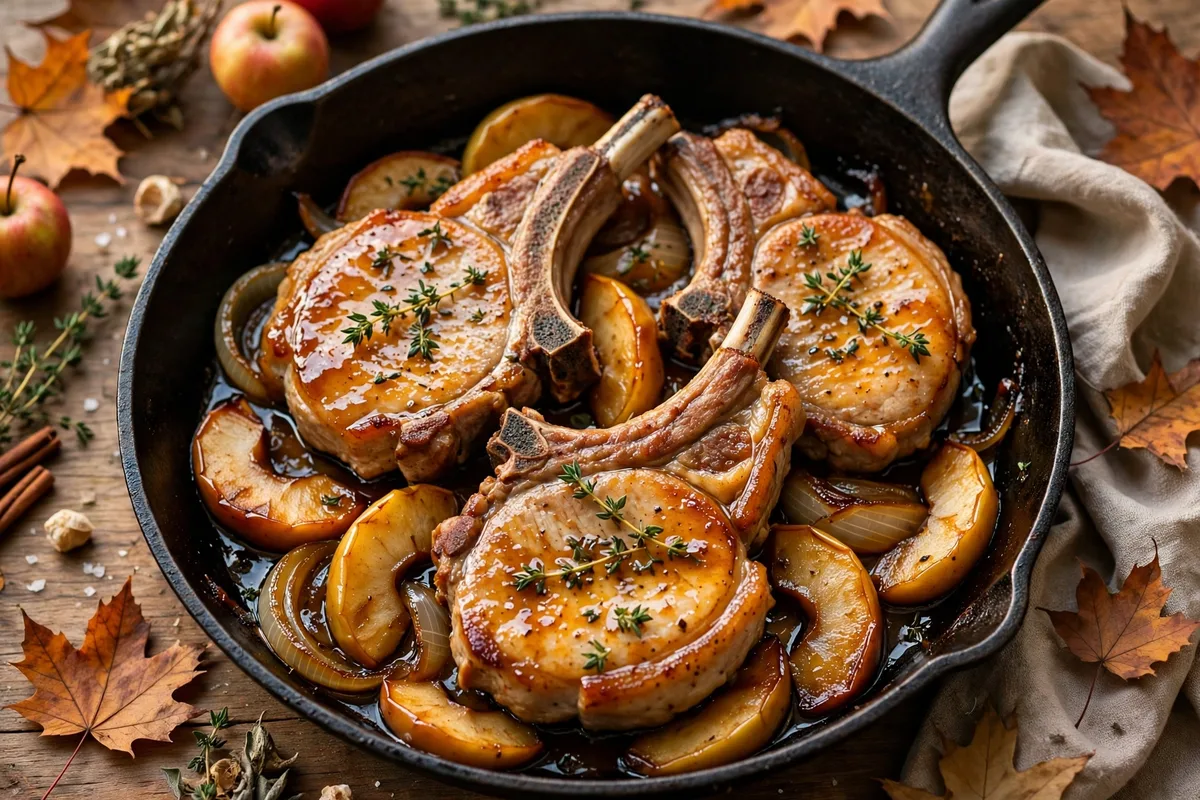
One-Pan Apple Cider Pork Chops with Apples (30 Minutes)
One-pan apple cider pork chops with apples is the dinner that tastes like the middle of fall: thick-cut pork chops seared until golden, then finished in the same skillet in a glossy apple cider glaze with soft, caramelised apple slices and a little Dijon mustard. It takes 30 minutes from start to finish, uses one pan, and needs no brine, no marinade, and no oven.
Pork and apples are one of the oldest pairings in American cooking — the sweetness of the fruit and the tang of the cider cut through the richness of the pork, while the pan sauce pulls the whole dish together. Most versions quietly ask for more than they promise: a brine the night before, an oven finish, or a recipe card that adds up to 45 minutes. This version does none of that.
It is a natural fit for a busy weeknight in November, and it is dressy enough for a small Thanksgiving-week table too — especially if you are cooking for a crowd that does not want a whole turkey. It serves four, and the only thing it asks of you is a good skillet and a thermometer.
Recipe at a Glance
Prep Time: 10 minutes (estimate)
Cook Time: 20 minutes (estimate)
Total Time: 30 minutes (estimate)
Servings: 4
Equipment: large skillet (cast iron or heavy stainless steel, at least 12 inches), cutting board, knife, measuring cups and spoons, instant-read thermometer
Why This Recipe Works
No brine, no marinade, no waiting. Brining is the step that turns a 30-minute dinner into a day-long project, and it is not necessary here. Thick-cut chops, a hot pan, and a short finish in the cider glaze keep the pork juicy without any advance prep. Season the chops, heat the pan, and you are cooking within five minutes.
The glaze builds in the same pan. After the chops are seared, the apples cook in the pork drippings, the cider deglazes the browned bits from the bottom of the skillet, and a spoonful of Dijon and a knob of butter turn the reduced cider into a glossy sauce. Every stage leaves flavour behind for the next one, and there is only one pan to wash.
The temperature is the recipe. Pork chops go from juicy to dry in the space of a few degrees, so this recipe is built around the thermometer rather than the clock. The USDA safe temperature for pork is 145°F (63°C) followed by a 3-minute rest, and that is also where chops are at their best — juicy and tender, with just a hint of blush in the centre.
Ingredients
For the Pork Chops
- 4 bone-in pork chops, about 1 inch thick (roughly 1 1/2 lb total)
- 1 teaspoon fine sea salt
- 1/2 teaspoon black pepper
- 1/2 teaspoon garlic powder
- 1/2 teaspoon paprika
- 1 tablespoon olive oil
For the Apples and Cider Glaze
- 2 medium apples, cored and thinly sliced (Honeycrisp or Pink Lady hold their shape best; see the notes below)
- 1 tablespoon unsalted butter
- 1 small yellow onion, thinly sliced (optional, but recommended)
- 1 cup apple cider (not apple cider vinegar)
- 1 tablespoon Dijon mustard
- 1 teaspoon apple cider vinegar
- 1 tablespoon brown sugar (optional — use it if your cider is very tart)
- 1/2 teaspoon dried thyme (or 1 teaspoon fresh thyme leaves)
- Fresh thyme leaves or chopped parsley, for serving (optional)
A note on the apples: firm, sweet-tart apples hold their shape in the hot glaze. Honeycrisp and Pink Lady are the best choices; Braeburn and Fuji also work. Avoid Red Delicious and McIntosh — they soften too quickly and turn to sauce. Leave the skin on: it helps the slices keep their shape and adds colour to the finished dish.
A note on the pork: thick-cut chops, about 1 inch, are essential for this method. Thin chops overcook before the glaze has time to happen. Boneless chops work too — just pull them a minute or two earlier, since they cook faster without the bone. Whichever cut you choose, the pork must reach 145°F (63°C) at the thickest part, away from the bone, followed by a 3-minute rest.
A note on the cider: use real apple cider — the cloudy, unfiltered juice sold in the produce section in the fall — not apple cider vinegar and not clear apple juice if you can help it. Cider reduces into a richer glaze than juice does. If you can only find juice, reduce it a minute longer and add the brown sugar.
Instructions
- Season the chops. Pat the pork chops dry with paper towels — dry meat sears, wet meat steams. Mix the salt, pepper, garlic powder, and paprika in a small bowl, and season both sides of each chop evenly. Let the chops sit at room temperature while you slice the apples and onion, about 5 minutes. Taking the chill off the meat helps it cook more evenly.
- Sear the chops. Heat the olive oil in a large skillet over medium-high heat until it shimmers, about 1 minute. Lay the chops in the pan in a single layer — you should hear a confident sizzle — and cook for 4 minutes on the first side without moving them. That untouched contact is what builds the deep golden crust. Flip and sear for 3 more minutes on the second side. The chops will not be cooked through yet; they finish in the glaze. Remove them to a clean plate and cover loosely with foil.
- Soften the apples and onion. Reduce the heat to medium. Add the butter to the same skillet and let it melt, scraping up any browned bits with a wooden spoon as it foams. Add the sliced apples and onion in a single layer and cook for 2 to 3 minutes, stirring once or twice, until the apples start to soften and colour at the edges. They should still be firm — they will finish cooking in the glaze.
- Build the glaze. Pour in the apple cider and stir in the Dijon mustard, apple cider vinegar, brown sugar (if using), and thyme. Use the spoon to scrape up every browned bit from the bottom of the pan — that is the foundation of the sauce. Bring the liquid to a simmer and cook for 2 to 3 minutes, until it has reduced by about a third and looks slightly syrupy.
- Finish the chops in the glaze. Return the chops and any juices from the plate to the skillet, nestling them into the apples and spooning some of the glaze over the top. Reduce the heat to medium-low, cover loosely, and cook for 2 to 4 more minutes, turning once, until a thermometer inserted into the thickest part of a chop (away from the bone) reads 145°F (63°C). The glaze should coat the back of a spoon; if it is still thin, remove the chops and simmer the sauce for 1 more minute.
- Rest and serve. Remove the skillet from the heat and let the chops rest in the pan for 3 minutes. This rest lets the juices redistribute and the temperature settle — the chops will rise a degree or two as they sit. Spoon the apples and glaze generously over each chop, scatter with fresh thyme or parsley, and serve hot.
Expert Tips
Do not move the chops while they sear. The single most common reason pork chops come out pale is impatience. Once a chop is in the hot pan, leave it alone for the full 4 minutes. The crust forms where the meat meets the pan, and every move breaks that contact. If a chop sticks when you try to flip it, it is not ready — give it another 30 seconds and it will release on its own.
Use the thermometer, not the clock. Chop thickness varies, and a 1-inch chop and a 1 1/4-inch chop can be 3 minutes apart. Start checking at 2 minutes into the glaze stage and pull the chops at 145°F (63°C) — carryover heat during the 3-minute rest finishes the job.
Keep the apples firm. The apples should be tender with a little bite, not soft and collapsing. Slice them about 1/4 inch thick, cook them only 2 to 3 minutes before the cider goes in, and remember they keep cooking in the glaze. If your slices are very thin, add them after the cider has reduced for a minute instead.
Reduce the glaze to the right consistency. The sauce should be glossy and just thick enough to coat a spoon — not watery, and not a sticky candy. If it reduces too far, add a tablespoon of cider or water and stir. If it is too thin, simmer it for another minute with the chops out of the pan.
One pan, in the right order. The order matters: chops first (for the fond), then apples and onion (in the drippings), then cider (to deglaze), then chops back in to finish. Reversing any step costs you the flavour the previous step built.
Variations and Substitutions
Add bacon and sage. For a richer version, cook 4 slices of chopped bacon in the skillet first until crisp, remove it, and sear the chops in the drippings. Stir the bacon back in with the apples and swap the thyme for 6 fresh sage leaves, fried crisp in the butter.
Make it with pears. Firm Bosc pears are an excellent swap for the apples — slice them the same way and cook them for the same time. Pears turn a little softer than apples, so slice them slightly thicker, about 1/3 inch.
Use boneless chops. Boneless pork loin chops cook faster: sear for 3 minutes per side instead of 4 and 3, and start checking the temperature after 1 to 2 minutes in the glaze.
What to Serve with Apple Cider Pork Chops
Mashed potatoes are the classic partner — they soak up the cider glaze beautifully — and a simple green vegetable like roasted Brussels sprouts or green beans balances the sweetness of the apples. For a Thanksgiving-week table, serve it alongside stuffing and cranberry sauce; it holds its own next to the turkey.
Storage and Reheating
Refrigerate: cool leftovers within 2 hours, then store the chops and the apples with their glaze in an airtight container in the refrigerator for up to 3 to 4 days.
Reheat: warm gently in a covered skillet over medium-low heat with a splash of apple cider or water (about 2 tablespoons), turning the chops once, until steaming hot throughout and the pork reaches 165°F (74°C). The microwave also works in 1-minute intervals, covered, with a splash of cider added first — but the skillet keeps the glaze glossy and the apples intact.
Food safety note: reheat leftover pork to 165°F (74°C) throughout, and do not leave cooked pork sitting at room temperature for more than 2 hours.
Frequently Asked Questions
What temperature should pork chops be cooked to?
The USDA safe temperature for pork chops is 145°F (63°C) at the thickest part, followed by a 3-minute rest. That rest is part of the safety guidance, not optional — the temperature rises slightly as the chop sits, and the juices redistribute. Check with an instant-read thermometer inserted away from the bone.
Can I use apple juice instead of apple cider?
Yes, but the glaze will be a little less complex. Apple cider is cloudy, unfiltered juice with more body; clear apple juice reduces into a thinner, sweeter sauce. If you use juice, reduce it for an extra minute and add the tablespoon of brown sugar only if the sauce tastes flat. Do not use apple cider vinegar as a substitute — it is far too acidic on its own.
Which apples are best for pork chops?
Firm, sweet-tart apples that hold their shape when heated: Honeycrisp and Pink Lady are the best choices, with Braeburn and Fuji as good alternatives. Avoid Red Delicious and McIntosh, which collapse into sauce. Leave the skin on — it helps the slices keep their shape and adds colour.
Do I need to brine pork chops first?
No. Brining helps very lean, thin chops, but thick-cut chops cooked to 145°F (63°C) and rested for 3 minutes stay juicy without it. Skipping the brine is what keeps this recipe inside 30 minutes. If your chops are especially lean, patting them dry and searing them properly matters more than any brine would.
Can I make this ahead of time?
You can cook it fully, cool it within 2 hours, and refrigerate it for up to 3 to 4 days — the flavour deepens overnight. Reheat gently in a covered skillet with a splash of cider, as described above. The apples will be softer after reheating, which is normal. This dish does not freeze well; the apples turn mushy on thawing.
What if my glaze is too thin?
Remove the chops to a plate, raise the heat to medium, and simmer the sauce for 1 to 2 minutes until it coats the back of a spoon. Stir in the butter at the end for extra gloss. If it is too thick, add a tablespoon of cider or water and stir until it loosens.
Nutrition (Estimates Only)
The following values are estimates only, calculated from standard ingredient data for 1 serving (one pork chop with apples and glaze). They have not been laboratory-tested and will vary with the exact brands and cuts used.
Per serving (estimate): about 420 calories; protein about 32 g; carbohydrates about 26 g; fat about 21 g; saturated fat about 7 g; fibre about 2 g; sugar about 19 g; sodium about 480 mg.
The sugar comes almost entirely from the apples and the cider, not from added sugar — the optional tablespoon of brown sugar adds about 3 g of sugar per serving. Using boneless loin chops instead of bone-in will lower the fat slightly.
Related Recipes
If you enjoyed this one-pan pork dinner, these recipes from Tasty Trends use the same quick, one-pan approach with a different flavour profile. Try the One-Pan Honey Mustard Pork Chops for another 30-minute pork chop dinner with a tangy-sweet sauce. The One-Pan Garlic Butter Pork Tenderloin Medallions are the same weeknight ease with a buttery garlic finish. And if you like the apple cider flavour here, the One-Pan Apple Cider Chicken Skillet brings the same fall cider sauce to chicken thighs.